Gi4SaveLife Blood Donation
A new study published in BMJ Global Health on World Blood Donor Day highlights how a community‑driven voluntary blood donation scheme, run by Lifeline Nehemiah Projects, has dramatically increased voluntary blood donation in rural Sierra Leone — offering a scalable model for strengthening health systems in low‑resource settings.
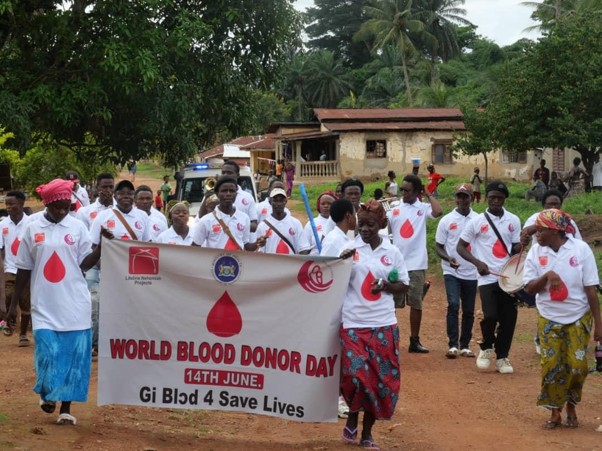
LNP and Koidu Hospital, collaborating to save lives through blood donation in Punduru on World Blood Donor Day – 14th June 2026
The Gi4SaveLife programme, led by Lifeline Nehemiah Projects with support from King’s College London, places ownership of blood drives directly in the hands of local community “hubs.” Over just eight months, these hubs collected 539 units of blood from 376 donors, rising from zero voluntary donations before the initiative began. Notably, 43% were repeat donors, signalling a major cultural shift toward regular giving.
Sierra Leone faces critically low levels of voluntary blood donation, contributing to high maternal mortality. Postpartum haemorrhage remains one of the leading causes of maternal death, and clinics often rely on emergency family donations or paid donors. Barriers such as limited awareness, cultural myths, and mistrust have historically undermined traditional, externally led blood drives.
One of the voluntary blood donors concluded: ‘Blood donation should be seen as a meaningful and rewarding act that brings joy through saving lives. When you donate blood, you are not only helping to save another person’s life, but you also gain valuable insight into your own health condition through the screening process.”
Gi4SaveLife reverses this model by empowering respected community members to lead monthly drives, dismantle myths, and build trust. This approach also reduced the cost‑per‑unit of blood by 40% compared to standard hospital‑led drives.
Voices from the Study
Prince Tommy Williams, Lifeline Nehemiah Projects: “By investing in local leadership and designing an approach rooted in trust and mutual respect, our volunteers have transformed blood donation into a meaningful, community‑driven act of solidarity.”
Shek Osma Koroma, one of our community stakeholders, “I used to believe and say that blood donation was demonic until my wife was due to deliver twins and was severely anaemic. The blood donated by community volunteers was used to save the lives of my wife and our twins. That experience completely changed my mindset and perception about blood donation.”
Mr Edward Robbin Ngeyawo, a community Hub member, said: “In our community, many people were initially afraid to voluntarily donate blood because of cultural myths and limited understanding of the importance of voluntary blood donation. However, because we live among them, speak the same language, and have earned their trust, they listened to us. Once we shared accurate information and respectfully addressed their questions and concerns, perceptions about blood donation began to change positively.”
Dr Cristina Fernandez Turienzo, King’s College London: “There is an urgent need to champion local solutions to local problems. Gi4SaveLife demonstrates the power of building local capacity.”
Ms Lucy November, King’s College London: “By empowering trusted community champions to dismantle deep‑rooted myths with facts, Gi4SaveLife created a sustainable, cost‑effective pipeline of voluntary donors.”
The initiative was funded by UKRI through the Economic and Social Research Council (King’s College London International Impact Fund).